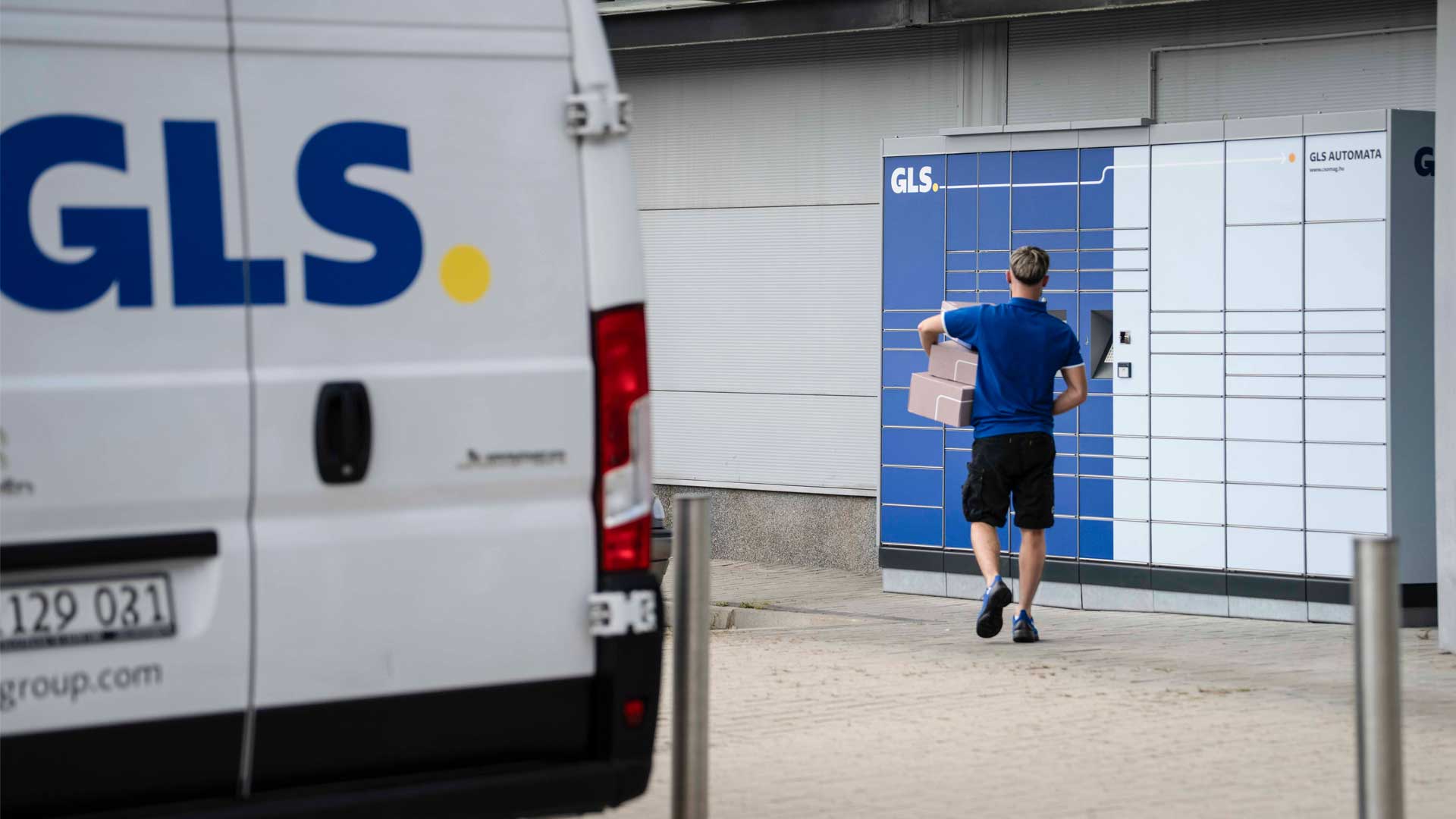
You’ve just bought a gift online. The problem: you work all day and never manage to be home when the courier arrives. Not long ago, this meant failed delivery attempts, delays, or even returns to sender.
Today, thanks to Out-of-Home (OOH) logistics, you can collect your order whenever it suits you at a nearby convenience point or locker.
What started as an alternative to home delivery has become one of the key drivers of last-mile transformation, combining flexibility for consumers, efficiency for ecommerce businesses, and operational optimization for logistics operators.
What is Out-of-Home logistics and why is it gaining ground?
OOH logistics is based on delivering parcels outside the home, through lockers and convenience points.
This system responds to a clear shift in consumer behavior: greater autonomy, more control, and increased delivery flexibility.
According to the Omnichannel in the Supply Chain Report by EAE Business School (2024), although 76% of consumers still consider home delivery essential, 59% already value convenience points and 39% smart lockers as flexible alternatives for receiving their online purchases.
This trend is also reflected in the market: according to our 2025 data, deliveries to convenience points grew by 40% over the past year, with more than 20 million parcels handled within our network of parcel shops and lockers, now accounting for 17% of total shipment volume.
In short, OOH logistics is becoming firmly established in Spain as a model that combines flexibility and efficiency, meeting both consumer expectations and the need to optimize the last mile.
OOH as a strategic evolution of the last mile
The last mile is the most complex and costly stage of the logistics process. It is where we see:
- The highest number of delivery incidents
- Failed delivery attempts
- Elevated operational costs
- Increased environmental impact
The out-of-home model allows deliveries to be consolidated at strategic points, reducing unnecessary trips and improving route planning.
For ecommerce businesses, this means offering more delivery options at checkout. For consumers, it means deciding when and where to collect their order. For logistics operators, it results in greater operational efficiency.
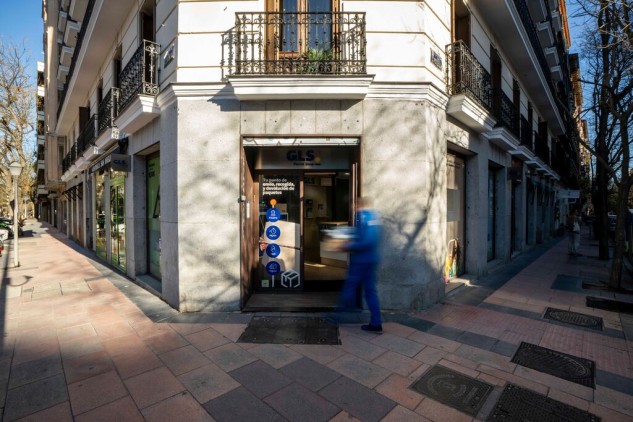
Main Out-of-Home modes: Lockers and convenience points
Out-of-home delivery is mainly available in two formats: lockers and parcel shops.
H3: What is a Locker?
A locker is a smart parcel terminal that allows recipients to collect or return their parcel independently using a secure access code.
Key advantages:
- Extended availability (many operate 24/7)
- Queue-free collection
- Ideal for users seeking full autonomy
Lockers are particularly useful in urban environments, transport hubs, shopping centres, and high-traffic areas.
What is a Convenience Point?
A convenience point is a local business — stationery shops, tobacconists, neighborhood stores — that acts as an official parcel collection and return location.
Key advantages:
- Close proximity in residential areas
- Extended opening hours
- Personalised customer service
For host retailers, joining the network also means generating additional foot traffic and increasing business visibility.
While lockers prioritise autonomy, parcel shops combine flexibility with proximity and human interaction.
How OOH logistics optimises costs and improves the customer experience?
Out-of-Home delivery doesn’t just benefit the recipient. It also directly impacts logistics efficiency and ecommerce profitability.
Reduction of failed deliveries: Up to 20% of home delivery attempts can be unsuccessful. The OOH model significantly reduces reattempts and unnecessary returns.
Last-mile cost optimisation: Consolidating deliveries at shared collection points enables better route planning and reduces individual trips.
Improved customer experience: Consumers gain greater control over their deliveries — choosing when to collect their parcel and reducing uncertainty.
For ecommerce businesses, offering locker or convenience point delivery can increase conversion rates by adapting to different customer profiles.
GLS and its OOH network: Convenience Points, lockers, and real coverage
The success of the Out-of-Home model depends on the strength of the network behind it. It is not enough to offer lockers or convenience points: they must be well distributed, technologically integrated, and managed by an experienced operator.
In this field, GLS has built an infrastructure that combines European reach with strong local coverage, ensuring that both end customers and ecommerce businesses benefit from convenient, fast, and sustainable collection and return solutions.
GLS as a benchmark in Out-of-Home logistics in Europe
GLS operates one of the strongest OOH networks in Europe: more than 94,700 convenience points and 30,200 lockers across the continent, of which more than 10,000 are in Spain. This extensive coverage ensures real accessibility and allows consumers to collect or return parcels almost anywhere.
How to Turn Your Business into a GLS Point?
For local retailers, joining the GLS network as a convenience point means:
- Generating recurring additional foot traffic
- Increasing business visibility
- Earning complementary income
Differentiating from competitors
In addition, retailers benefit from operational support and visibility within the GLS ecosystem.
Out-of-Home Logistics: From alternative to standard
Out-of-Home logistics is no longer an emerging trend — it is becoming the standard.
In a context where consumers demand flexibility, ecommerce businesses need cost optimization, and the last mile requires efficiency and sustainability, the OOH model stands out as a strategic solution.
Through its network of convenience points and lockers , GLS enables flexible, efficient delivery adapted to the new dynamics of ecommerce, connecting businesses, retailers, and consumers within a smarter logistics model.
To better understand how this model is evolving and what consumers truly think, we invite you to download our Out-of-Home Delivery Perception Study . It explores trends, collection habits, customer expectations, and the impact of OOH delivery on the online shopping experience.
➡️ Download it and discover why flexible delivery has become a priority for both ecommerce businesses and consumers.